
You may cringe at the thought of root canal treatment, but there are actually a lot of misconceptions out there about the procedure. Thanks to modern dentistry, root canals shouldn’t be overly painful. In fact, it’s quite the opposite. When you have a severe infection that’s gotten down to the inner pulp and root canals of your tooth, that’s what can be really painful. Root canal procedures are designed to get rid of that pain from inflammation or infection and allow you to preserve your natural tooth. Contact us today to learn more!
Contact Us
Signs You May Need a Root Canal
- Toothache
- Tooth sensitivity
- Swollen gums around a tooth
- Tender gums
- Pain when chewing or biting down
- Unusual tooth discoloration
What Is the Root Canal Procedure Like?
We’ve found that when patients know what to expect when it comes to a root canal procedure, it can help alleviate some of their fear. Root canal treatment is actually a simple, routine procedure and the most you will likely feel during it is just pressure (not pain!).
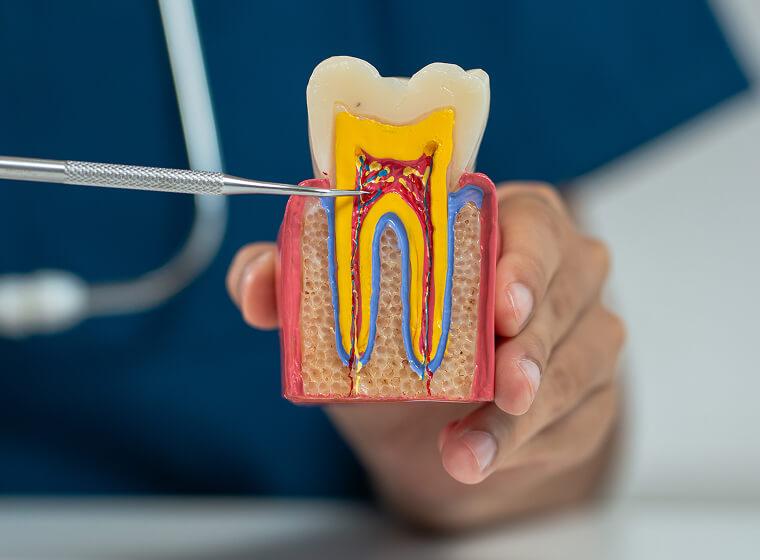
Our first step is to numb the treatment area with local anesthesia. We want to make sure you don’t experience any discomfort during the procedure. Next, we’ll make a small opening in the top of the tooth, through which we’ll clean away any damaged or diseased pulp from the root canals. Then, we’ll shape, clean, and dry the area to limit the possibility of further infection. The final step is placing a restoration, either a filling or a dental crown, to seal and strengthen the area.
Are there any alternatives to root canals?
Once an infection has occurred inside a tooth, it is essential that the infected tissue be removed so that it does not spread to other parts of the mouth or body. The only alternative to root canal treatments is to extract teeth altogether, however, that is usually not necessary when the infection is caught early and can be taken care of right away. Dental crowns almost always need to be placed after a root canal as well to protect and support the tooth’s structure.
How painful are root canals?
Not only will your teeth and gums be numb during your treatment, but the injection of local anesthetic into the gums will also be easy and painless as well, thanks to DentalVibe®. Once the numbness begins to wear off, you may experience some soreness and discomfort, so we recommend keeping some over-the-counter pain medication on hand, or we can prescribe something for you as well.
Don’t put off a needed root canal! The spread of infection can lead to tooth loss or affect the surrounding teeth. Scheduling a root canal as soon as it is recommended is the best thing you can do to preserve your smile.
Contact Us